
As organizations grow, disconnected systems often create operational friction. Payroll may operate in one platform, HR documentation in another, and time tracking in spreadsheets. While this patchwork approach may function initially, it rarely scales efficiently.
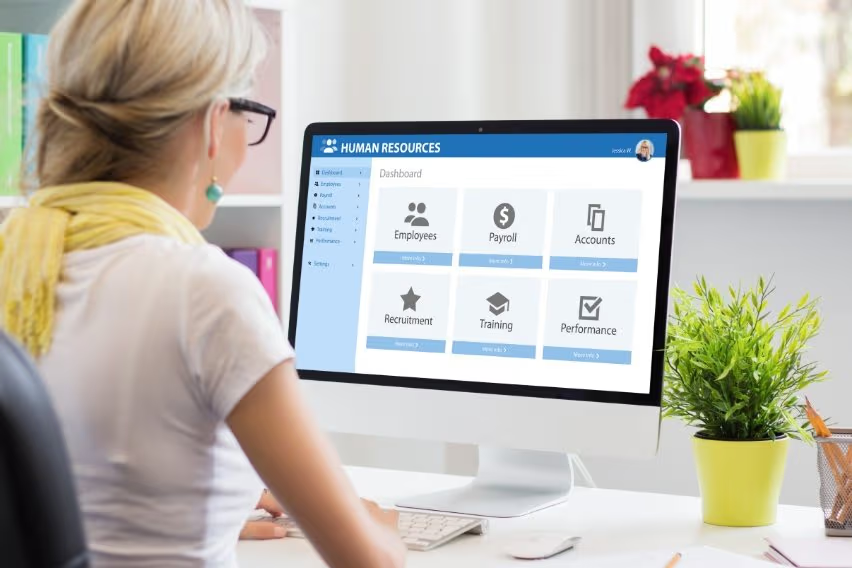
Integrated payroll and HR technology brings these critical functions together — improving accuracy, compliance, and visibility across the organization.
Eliminating Data Silos
When payroll, timekeeping, and HR systems operate separately, data must be entered multiple times. This increases the likelihood of:
- Inconsistent employee records
- Payroll discrepancies
- Delayed updates
- Reporting errors
An integrated platform centralizes employee data, ensuring that updates to compensation, benefits, or job classifications flow consistently across systems.
This reduces manual entry and improves overall data accuracy.
Improving Payroll Accuracy
Payroll errors often stem from disconnected timekeeping systems or incomplete data transfers. When hours worked, PTO balances, and benefit deductions are automatically integrated, the risk of miscalculations decreases significantly.
Businesses that use structured payroll software experience:
- 31% fewer errors
- 33% more efficiencies
- 70% increased compliance
Accurate payroll processing strengthens employee trust and reduces administrative corrections.
Strengthening Compliance Oversight
Compliance requirements affect both payroll and HR functions. Wage laws, ACA tracking, employee classification, and documentation standards must align.
Integrated systems support:
- Real-time tracking of hours and eligibility
- Automated compliance reporting
- Centralized document storage
- Consistent application of regulatory rules
When payroll and HR data work together, compliance monitoring becomes proactive rather than reactive.
Enhancing Reporting and Decision-Making
Leadership requires visibility into workforce data to make informed decisions. Integrated technology provides clearer insights into:
- Labor costs by department or location
- Overtime trends
- Workforce growth patterns
- PTO and absence trends
With consolidated reporting, executives can evaluate workforce performance and operational efficiency more effectively.
Supporting Scalable Growth
Growth introduces complexity — new hires, multiple locations, seasonal staffing, and expanded benefit structures. Manual systems and disconnected tools often struggle to keep pace.
Integrated payroll and HR platforms are designed to scale. Features such as multi-EIN support, workforce seasonality tracking, and variable schedule management allow organizations to adapt without rebuilding internal systems.
Creating a Better Employee Experience
Employees expect easy access to pay information, time-off balances, and documentation. Integrated systems often include employee self-service portals that allow secure access to personal information, tax forms, and onboarding materials.
A streamlined experience improves transparency and reduces the volume of administrative inquiries to HR teams.
Building a Stronger Operational Foundation
Integrated payroll and HR technology does more than improve efficiency — it builds structure. When systems are aligned, organizations gain:
- Reduced administrative burden
- Stronger compliance posture
- Improved workforce visibility
- Greater operational confidence
For growing businesses, integration is not simply a convenience. It is a strategic advantage that supports long-term stability and informed leadership.